
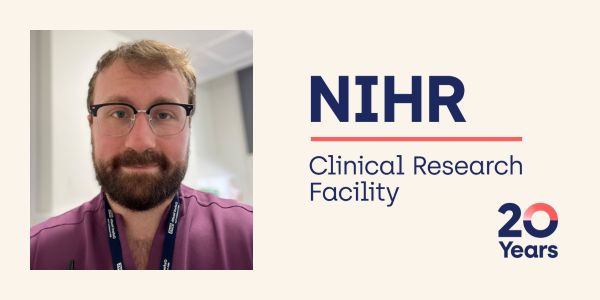
In our latest 60 Second Interview, we meet speciality Dr Andrea Paggi, a psychiatrist and clinical researcher with a passion for improving treatments for bipolar disorder. He shares his journey from Italy to Oxford, what drew him to clinical research, and how combining research with patient care is helping to explore better treatment options for patients.
- Tell us about yourself, and what attracted you to working at the CRF and Bipolar Disorder Research Clinic?
I’m a psychiatrist, originally from Italy. During my training, I developed a significant interest in bipolar disorder and wanted to get more involved in research, so I decided to spend part of my training at the NIHR Clinical Research Facility: Oxford Health. I enjoyed the combination of research and patient care and ended up staying. Working in the Bipolar Disorder Research Clinic enables me to combine both interests while helping to develop better treatments for people living with bipolar disorder.
- What is the focus of the work in your role?
My role focuses on delivering clinical trials in mental health and helping people access research opportunities. In the Bipolar Disorder Research Clinic, we support people who are interested in taking part in research, as well as those already involved in clinical trials. More broadly, I work across a range of research studies and help ensure they are delivered safely and effectively.
- What does a day in your current job look like? What are you currently working on?
Every day is different, which is one of the things I enjoy most. I spend my time seeing participants, carrying out assessments, and working with research teams. At the moment, I’m mainly involved in studies looking at both medication and non-medication treatments for bipolar depression. It’s an exciting area because we still need better treatment options, and research can help us get there.
- How did you get to where you are today?
It wasn’t a straightforward path. I decided to study medicine because I wanted to become a surgeon, however after graduating, I fell in love with psychiatry and chose to specialise in psychiatry instead. The more I trained, the more I realised how imperative it is to find better treatment options for people with mental health conditions, particularly bipolar disorder. Almost by chance, I had the opportunity to get involved in a large clinical trial, which I later ended up coordinating. Seeing how research could help develop better treatments sparked my interest in clinical research and eventually brought me to Oxford.
- Who or what inspires you?
I’m inspired by the fact that we still have limited treatment options for many mental health conditions. The possibility of helping to develop better treatments and improve people’s lives is a big motivation for me.
- If you were not in your job currently, what would you like to be doing?
Playing professional rugby, although I’m not entirely sure I have the talent for it.
All information about the Bipolar Research Clinic is available on their website: Bipolar Disorder Research Clinic – NIHR Biomedical Research Centre: Oxford Health